



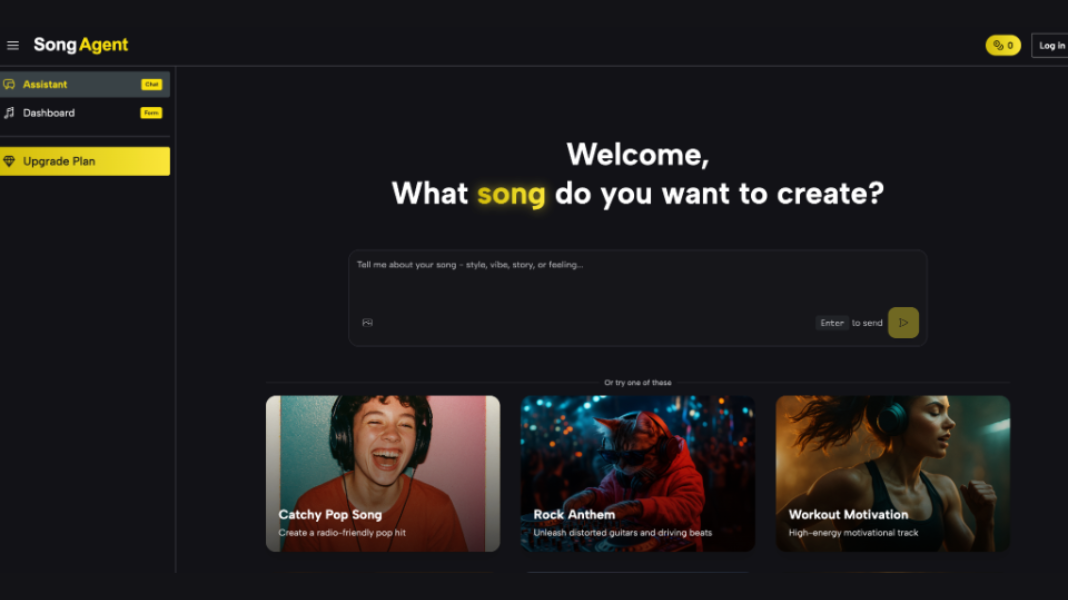
Music production rarely slows down because a team has no ideas. The delay comes from translating a brief into musical decisions, drafting lyrics, testing styles, producing variations, making revisions, and preparing usable files. When those tasks live in separate tools, even a short background track can become a small production project.
A workflow-oriented approach treats music as a managed pipeline rather than a one-off event. In that pipeline, an AI Music Agent can sit between the creative brief and the downstream project. SongAgent analyzes a request, presents a plan, supports conversational refinement, and offers batch creation for related tracks. The value is a repeatable route from intent to approved audio with fewer context switches.
What Is AI Music Agent in a Workflow Context?
In a workflow context, an AI Music Agent is a coordination layer for music creation. SongAgent analyzes a request as a connected musical brief rather than asking the user to map every idea manually to melody, harmony, rhythm, structure, and instrumentation. Its blueprint can be reviewed before generation, including the proposed structure, instrumentation, key, tempo, and style.
This planning layer catches misalignment early. A team can define the role of a track travel music, podcast audio, a jingle, or a game theme and check the interpretation before audio is produced. Generation and refinement then begin with a clearer shared target.
Its batch composition approach also supports albums, EPs, soundtracks, and song collections that need both variety and stylistic consistency. The unit of work can become a coordinated audio package rather than one isolated song.
Where Traditional Workflows Break Down
Traditional workflows fragment between creative language and technical execution. A director may describe a scene as tense but restrained, while a producer must translate that into tempo, harmony, instrumentation, and arrangement. If the draft misses the mood, the brief travels back through the same chain.
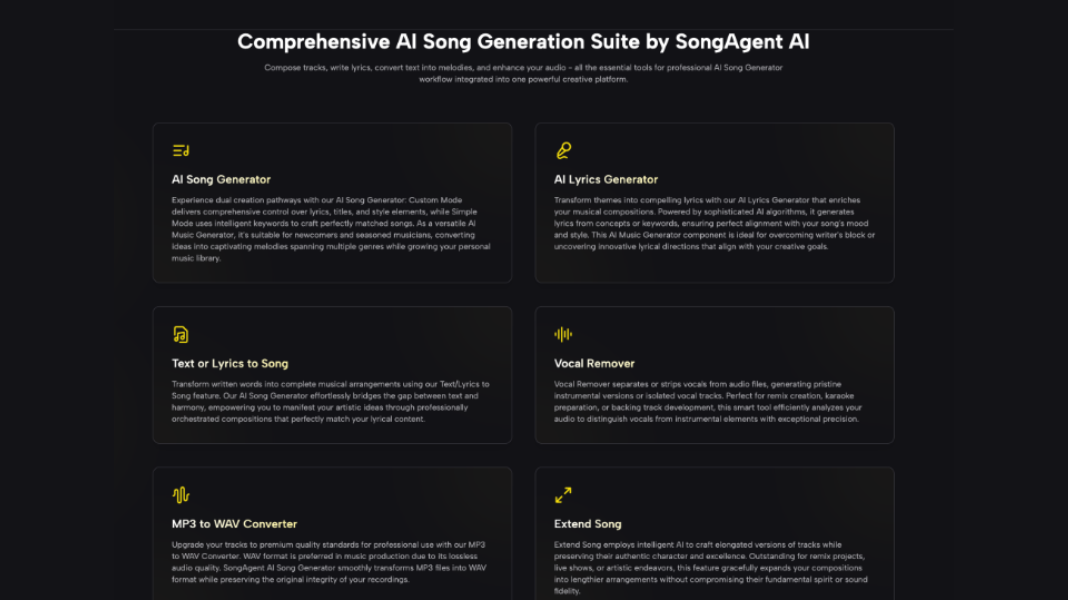
Tool switching creates another break. Lyrics, composition, vocal separation, and file conversion may all happen in different applications. SongAgent brings song and lyric generation, text or lyrics to song, vocal removal, MP3-to-WAV conversion, and song extension into one platform. Keeping adjacent tasks together reduces repeated context rebuilding.
Scaling exposes the largest weakness. A podcast package may need an intro, background beds, transitions, and an outro; a game may need cues for locations, battles, and ambient scenes. Producing each asset independently can create inconsistent tone and repeated approvals. Batch creation addresses the collection as a whole.
End-to-End Workflow
Brief Intake and Musical Planning
The pipeline begins with a functional brief: use, audience, mood, style, and constraints. SongAgent analyzes a natural-language description into musical components. Its proposed blueprint provides a review point before generation, so the team can correct a mismatch before a complete track is rendered.
Controlled Generation and Variation
Once the direction is approved, SongAgent provides Simple and Custom creation modes. Simple Mode uses descriptive keywords for rapid creation, while Custom Mode offers control over the title, lyrics, and style elements. Genre, mood, voice, and tempo options let teams choose between fast concept work and a more specified deliverable.
Variation belongs inside this stage. SongAgent supports multiple compositions and continued refinement, allowing changes such as a more energetic chorus or added strings in a bridge. Batch creation can maintain the overall concept while giving tracks distinct characters.
Refinement, Utility Processing, and Export
Approved music may still need adjustment. SongAgent lists editing, track extension, and vocal separation within its production ecosystem. Its suite includes a Vocal Remover for instrumental or isolated-vocal outputs, Extend Song for longer arrangements, and an MP3-to-WAV converter.
Export creates the handoff to the wider content pipeline. SongAgent provides MP3 downloads, while WAV files and stem separation are listed for Pro and Enterprise users. Commercial licensing is tied to those paid tiers; the free offering is described as personal-use only. Teams should match the plan and format to the intended release.
 How AI Song Agent Enables This Workflow
One Brief Becomes a Structured Production Target
The AI Song Agent reduces manual translation between a creative request and musical specifications. It considers genre, mood, structure, and emotional intent, then presents a reviewable plan. Creative judgment remains with the team, but it is concentrated at a useful control point before detailed revisions begin.
Conversation Keeps Revisions Attached to Intent
Revision notes often lose context as they move between documents, messages, and software. SongAgent uses continued conversation for adjustments to energy, instrumentation, or arrangement while keeping the original vision in view. This shortens the loop between listening and revising.
Batch Composition Supports Repeatable Output
For related assets, SongAgent says it can break a larger request into individual tracks, process compositions in parallel, and maintain stylistic consistency across an album, soundtrack, or song series. This fits deliverables such as podcast packages, campaign variations, and game cues.
Adjacent Tools Reduce Production Friction
Lyrics, text-to-song conversion, vocal removal, extension, conversion, and export can otherwise create extra handoffs. Housing them in the same platform reduces tool switching during the portion SongAgent supports. Editing, publishing, or implementation can continue in the team’s existing environment after export.
Workflow Integration in Practice
Practical integration requires defined inputs, checkpoints, and outputs not an invented API. The input can be a standard brief covering purpose, audience, mood, genre, instrumentation, tempo, vocals, duration, and variations. SongAgent becomes the planning, generation, and refinement workspace for that brief.
The control points are the musical blueprint, generated previews, and final approval. A content lead can define the function, a creative reviewer can check brand or narrative fit, and an operator can manage generation, revisions, and exports. For recurring work, the brief and review criteria remain consistent even when the campaign changes.
The output is a downloaded asset ready for a video editor, podcast session, game project, broadcast package, or release workflow. If an instrumental, isolated vocal, extended arrangement, or WAV file is needed, the relevant utility or plan can be selected before handoff. The result is fewer intermediate conversions and disconnected drafts.
Conclusion
SongAgent is most useful when music is part of a recurring production system. Its planning layer creates reviewable musical decisions, Simple and Custom modes offer different levels of control, conversational refinement shortens revisions, and batch composition supports coordinated collections. Adjacent tools keep more preparation work in one environment.
SongAgent remains one part of a broader workflow. Teams must define the brief, approve the direction, select the correct rights and file quality, and place exported audio into the final content or distribution process. With those controls, the goal becomes consistent, usable audio at the pace modern content operations require.